
You are standing in front of three pairs of medical trousers: straight, tapered and joggers. See how to choose a cut that fits your way of working, body shape and preferences.
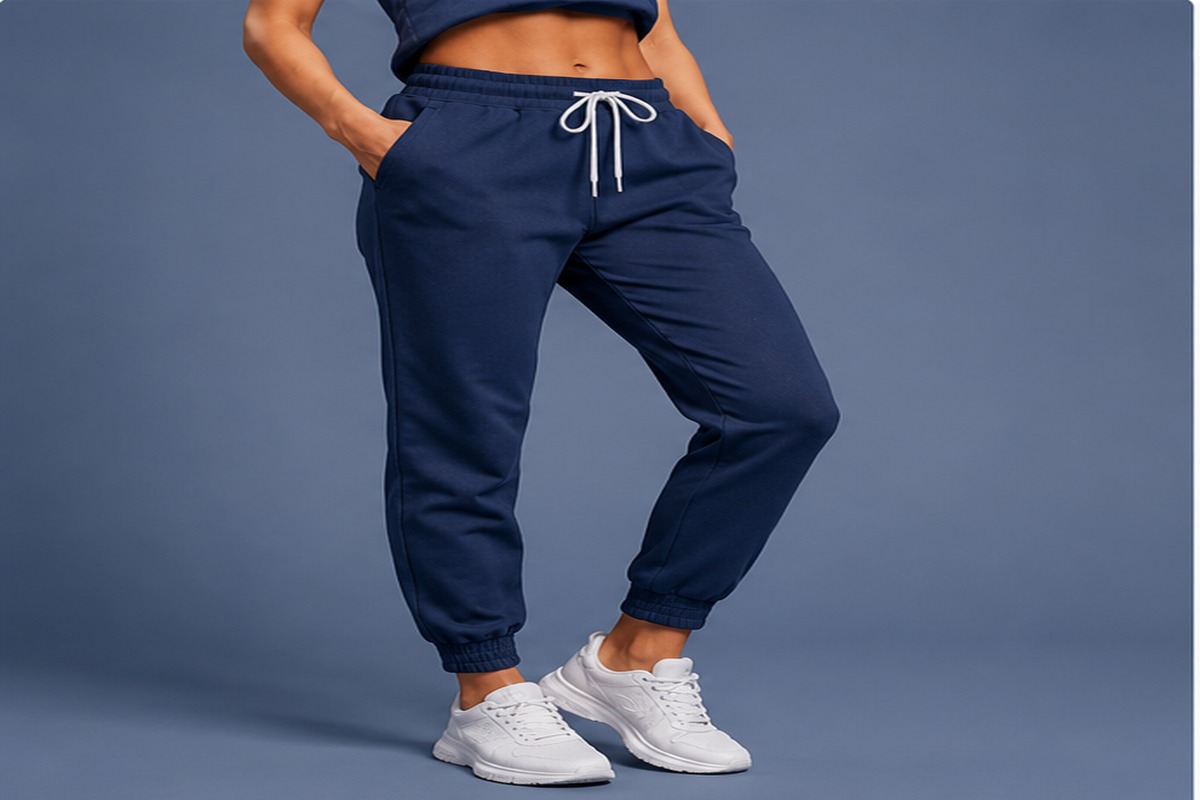
You are standing in front of three pairs of medical trousers.
The first have a straight leg, the second taper gently towards the ankle, and the third end in a characteristic elastic cuff.
In a photo, the difference looks simple: classic, tapered or joggers — just a matter of style. But medical trousers are not really judged in a product photo.
If you are wondering which scrub trouser cut to choose — joggers, classic or tapered — the image alone will tell you very little.
You judge the trousers several hours later, after repeatedly sitting down, standing up, leaning over a patient, kneeling beside a treatment table or moving between rooms. Your phone is in one pocket and something else is in the other. The waistband should stay where it belongs and the leg should not need adjusting every few minutes.
During work, cut stops being only an aesthetic choice. What matters is how much room you have in the thigh, where the rise sits, what happens during a squat and whether you actually like a cuff around the ankle.
That is why there is no single answer to the question “joggers or classic medical trousers?”. Joggers are not automatically better because they look more modern, straight trousers are not worse because they are familiar, and tapered trousers are not simply “joggers without a cuff”.
Each cut behaves differently. At UNDAMED we look at trousers not only as part of a set, but as a construction that must work with the body, the fabric and the way a person works.
Quick answer: joggers, straight or tapered trousers?
Medical joggers have a tapered leg finished with an elastic cuff at the ankle. They suit people who like a sporty, compact silhouette and do not want fabric moving around the shoe.
Classic medical trousers have a straight or only lightly shaped leg without a cuff. They look more neutral, provide more space around the lower leg and fit naturally into a more formal style.
Tapered trousers are a good starting point for someone who wants a slimmer leg without a sporty cuff. They sit between the classic straight cut and joggers: the leg narrows towards the ankle but remains open.
In practice, the decision comes down to what you want from the leg: the secure cuff of a jogger, the room of a classic straight cut or a tapered line without ribbing. Body shape, fabric and workplace rules also matter.
What is the difference between joggers, straight and tapered medical trousers?
Medical joggers
The easiest way to recognise joggers is the bottom of the leg. They end at the ankle with an elastic cuff or ribbed band and usually taper gradually from the thigh downwards.
The cut may be more or less fitted. The cuff alone does not tell you whether the trousers will be comfortable. Thigh width, rise, crotch construction, waistband, leg length, fabric and pocket placement all matter.
A badly designed jogger can be too tight through the thigh, pull during a squat or bunch above the ankle. A well-designed one should provide the amount of room required by the cut and the intended use.
Classic medical trousers
Classic trousers have a straight or only lightly shaped leg that remains open at the ankle. Their line is calmer and less sporty. They also provide more room around the calf and ankle, which many people simply prefer, especially if they dislike a cuff touching the leg.
A straight cut can look very good in an elegant clinic, dental practice or consultation setting. But “classic” should not mean shapeless. The proportions through the thigh, knee and hem still determine how the trousers look on the body.
Tapered trousers
This is often the most underestimated cut. Tapered trousers narrow from the thigh or knee towards the ankle, but they do not end in a cuff. The silhouette is slimmer than in classic straight trousers while remaining less sporty than joggers.
They are a good choice for someone who says: “I like the line of joggers, but I do not want an ankle cuff.”
Do medical joggers look professional?
Yes. Medical joggers can look professional. The overall cut, fabric, colour, fit and workplace dress code matter — not the cuff alone.
Navy or burgundy joggers with a well-designed waistband and a clean silhouette will be perceived very differently from loose sports trousers.
Professional does not mean permitted everywhere. A facility may have its own rules on clothing, colour or cut, particularly where uniforms are supplied by the employer or must meet organisational requirements.
Ordinary scrubs are also not automatically personal protective equipment. The CDC distinguishes general work clothing, including uniforms and scrubs, from PPE designed to protect against a specific hazard. [6]
Do not choose by profession. Choose by the way you work
The same profession does not mean the same work pattern. Two dentists can have very different days; one may sit at a dental unit most of the time while another constantly moves between rooms. The same is true for nurses, physiotherapists and other professionals.
Choose trouser cut primarily according to how much you move, how long you sit, how you work, what you carry in your pockets and what level of fit you prefer. The job title is only another clue.
Who are joggers, straight trousers and tapered trousers for?
Joggers — when you like a compact leg
You may like joggers if you walk a lot, bend, kneel, squat, dislike loose fabric around the ankle and want the trouser leg to end in a fixed position above the shoe.
The cuff keeps the hem close to the ankle. With the correct length, it limits the chance of the material moving under the shoe or dragging along the floor. This does not make joggers “more hygienic”; the cuff is a construction detail, not protective equipment.
Straight trousers — when you want more room
A straight leg may feel better if you dislike a cuff around the ankle, prefer a more formal line, want more freedom around the calf, wear footwear that works better visually with an open hem or simply prefer classic trousers.
Tapered — when you want a slim line without a sporty cuff
Tapered trousers suit people who want a more contemporary, ordered silhouette but do not feel comfortable in joggers. The leg stays closer to the body than a classic straight cut while the ankle remains open.
Cut is only half the story — the other half is fabric
Even a very good pattern can become uncomfortable if it is paired with the wrong material. This is especially true in more fitted cuts. The closer the fabric sits to the thigh, knee and calf, the more clearly you feel its behaviour during movement.
A study by Adams and Keyserling on protective coveralls showed that garment size had a measurable effect on range of motion and that undersized clothing restricted some movements; hip flexion was reduced by as much as 24% compared with the control condition. The research did not concern UNDAMED scrubs, but it clearly illustrates the general relationship between clothing and mobility. [4]
An older study of nurses’ uniforms also found range-of-motion restrictions related to clothing construction, particularly around the hips. [5]
Do joggers require elastane?
No. “Jogger” is a cut, not a fibre composition. In more fitted styles, however, the elastic properties of the material can significantly affect perceived freedom of movement.
At UNDAMED we work, among other fabrics, with a blend of 60% polyester, 35% viscose and 5% elastane. We chose it after sewing and wearing garments, squatting, sitting, washing and ironing them and observing how the material works together with the cut.
Fibre percentages alone do not define the behaviour of a finished fabric. Construction, weight and finishing matter as well.
How should you choose the size of medical joggers?
Joggers are not inherently “smaller” than classic trousers. They may, however, be more fitted, so the same letter size can feel different in joggers than in looser straight trousers.
Assess size together with the construction of the specific style. ISO 8559-1 describes anthropometric measurement methods used in clothing design and sizing, while ISO 8559-2 defines primary and secondary dimensions used in body-measurement-based size designation systems. [1] [2]
With joggers, pay particular attention to three areas: the thigh, the leg length and the rise/waistband.
Thigh: if the leg tapers strongly from the thigh, this is where a too-small size will often reveal itself during sitting or squatting.
Leg length: the cuff should end in the place intended by the design. If the leg is too long, fabric can bunch above the ankle; if it is too short, the proportions change and the cuff sits too high.
Rise and waistband: stand in front of a mirror, then sit, bend and squat. Trousers that look right only while standing have not yet passed a complete fitting test.
Pockets, waistband and cuff — details that matter in practice
A product photo can make the trouser line look perfect, but after a few hours of work you start assessing other things.
Pocket: the phone has to fit for real. We check whether it can be removed with one hand, whether it slips out during a squat and whether a loaded pocket pulls down the whole leg. In one UNDAMED prototype, this test ended with the pocket being deepened by 1 cm.
Waistband: it should remain in place. It can contain elastic, a drawstring or both, but an elastic waistband is not automatically comfortable. Too loose and it constantly needs adjusting; too tight and it becomes uncomfortable when sitting.
Cuff: not everyone likes one. A well-fitted cuff keeps the bottom of the leg close to the ankle, which can be useful on an active day. For someone who dislikes anything around the ankle, an open hem will feel more natural.
When are medical joggers not the best choice?
Joggers are not universally the best cut. They may not suit you if you dislike an ankle cuff, prefer a more formal line, feel uncomfortable with a more enclosed ankle or work in a facility that specifies the uniform.
In those cases, straight or lightly tapered trousers can be a more natural choice.
What about wide-leg medical trousers?
Joggers, straight trousers and tapered trousers do not exhaust all options. Wide-leg medical trousers offer much more fabric around the leg and a very different silhouette. They may suit people who dislike fitted styles and prefer a looser, more fashion-oriented look.
With a wide leg, length, the amount of fabric near the shoe and the way the trousers behave during walking become especially important. Flare trousers are another category with their own logic of proportion and fit.
Five mistakes when choosing medical trousers
- Choosing only by appearance. A fitting in motion tells you more than a photo.
- Assuming the same size will fit identically in every cut. A size M in straight trousers and a size M in strongly tapered joggers can feel completely different.
- Assuming elastane automatically means very stretchy trousers. Elastane content is only one factor; finished fabric behaviour also depends on construction.
- Ignoring leg length. In straight trousers an overly long leg can fall onto the shoe; in joggers excess material can bunch above the cuff.
- Testing an empty pocket. If you carry a phone, keys, scissors or other items, try the trousers with what will actually be in the pocket.
Which medical trouser cut should you choose for your specialty?
Specialty can help narrow the options, but it should not decide for you.
Nurse: if you move a lot, bend frequently and carry many items, pay particular attention to waistband stability, room in the thigh during a squat, pocket placement and the behaviour of loaded pockets. Joggers or well-constructed tapered trousers are often good starting points.
Physiotherapist: squats, kneeling, lunges and floor work make room through the hips, thighs and crotch more important than the name of the cut. The fabric also needs to cooperate with movement.
Dentist or orthodontist: long periods of sitting make waistband construction especially important. A stable but non-restrictive waistband may matter more than whether the ankle is cuffed.
Doctor in a clinic: straight or tapered trousers naturally suit a more formal image. Joggers in a well-chosen colour and a refined set can also look professional if workplace rules allow them.
Veterinarian: frequent bending, kneeling and quick changes of position make movement testing essential. A jogger cuff keeps the hem close to the ankle but does not replace correct overall fit.
Paramedic: requirements vary significantly, so workplace rules and required equipment take priority.
Joggers, straight, tapered and wide-leg — decision table
| Cut | Strength | Limitation | Good for |
|---|---|---|---|
| Joggers | Compact leg, cuff stays near the ankle, sporty modern silhouette | Not everyone likes the cuff; correct thigh fit and length are important | People who walk and kneel often and prefer a sporty cut |
| Straight | Most room around the calf, classic neutral line | Wrong length can fall onto the shoe or floor | People who prefer classic styling, a more formal look and no cuff |
| Tapered | Slimmer line without a sporty cuff | Too-tight construction can reduce comfort at the thigh and knee | People looking for a compromise between joggers and classic trousers |
| Wide-leg | Lots of freedom around the leg and a strong fashion silhouette | More fabric makes correct length and hem control important | People who prefer looser cuts |
How do you decide?
Ask yourself: Do I like a cuff around the ankle? Do I want a sporty or classic look? How much do I move? Do I sit for long periods? What do I carry in my pockets? What happens during a squat? Does my workplace specify the cut?
Only then look at the name of the style.
The cut should fit the way you work
We return to the three pairs of trousers — straight, tapered and joggers — with wide-leg added beside them.
We still will not tell you to choose joggers because they are “the best”. They are not the best for everyone. There is no single universal trouser cut that works for every person.
If you spend many hours on your feet and like a compact sporty line, you may love joggers. If you prefer a more classic look and dislike anything around the ankle, a straight leg may feel better. If you want a slim cut without a cuff, tapered trousers may be exactly right. If you prefer more space around the leg, wide-leg or flare may be worth trying.
At UNDAMED we approach trouser construction in the same way as the rest of the garment: first we design, then sew and fit a prototype, sit down, bend, squat, load the pockets and return to the pattern if something can be improved. [7]
Medical trousers should not be judged only in a photograph. They should help you while you work.
Sources and basis of the article
1. ISO 8559-1:2017 — Size designation of clothes — Part 1: Anthropometric definitions for body measurement.
2. ISO 8559-2:2025 — Size designation of clothes — Part 2: Primary and secondary dimension indicators.
3. CIOP-PIB. Atlas of Human Measurements. Data for design and ergonomic assessment. Warsaw 2023.
4. Adams P.S., Keyserling W.M. The effect of size and fabric weight of protective coveralls on range of gross body motions. AIHA Journal. 1995;56(4):333–340.
5. Stubbs D.A. et al. Nurses’ uniform: an investigation of mobility. International Journal of Nursing Studies. 1985;22(3):217–229.
6. Centers for Disease Control and Prevention (CDC) — materials on personal protective equipment and the distinction between general work clothing and PPE.
7. UNDAMED — the description of pattern development and prototype testing is based on the team’s garment design and production experience accumulated since 2012.
About the author
The UNDAMED team designs and develops medical clothing in Poland, drawing on experience gained since 2012 in garment design, pattern construction and clothing production. We do not stop at the drawing stage: we sew prototypes, fit them on different body shapes, test them in movement and return to the pattern when something can be improved.